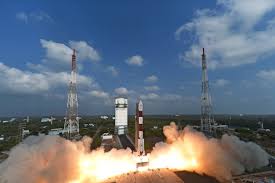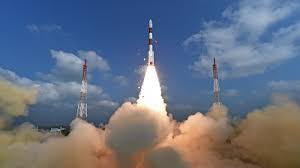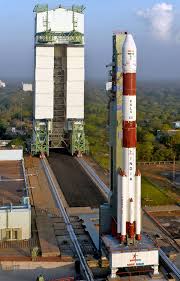
On February 15, 2017, a single PSLV rocket placed 104 satellites into orbit in one launch — smashing the previous world record of 37. The world watched. The world was stunned. India had redefined what a launch vehicle could do.
Watch: PSLV-C37 104 Satellites LaunchPSLV-C37 lifted off from SDSC SHAR, Sriharikota on February 15, 2017, at 9:28 AM IST. Over the next 28 minutes, it deployed 104 satellites into a 505 km sun-synchronous orbit — the highest number of satellites ever placed in orbit by a single rocket in a single mission, anywhere in history.
The previous record was 37 satellites, set by Russia in 2014. India nearly tripled it. The mission carried 3 Indian satellites — Cartosat-2D and two INS nano-satellites — along with 101 international satellites from 18 countries including the USA (96 satellites, mostly from Planet Labs), Israel, Kazakhstan, Netherlands, Switzerland, UAE, and others.
The launch was a commercial masterpiece: ISRO earned foreign exchange from 96 international payloads, demonstrated PSLV's reliability and precision to a global commercial market, and proved that India's launch vehicle could handle operational complexity far beyond standard missions.
Deploying 104 satellites in a single pass is not just a matter of carrying them up — it is a precision choreography. Each satellite must be ejected at a specific velocity and angle so it enters its intended orbit without colliding with previously deployed satellites or the rocket itself.
ISRO engineers designed a deployment sequence where satellites were released in groups, with calculated time intervals and velocity increments between each release. The PSLV's fourth stage acted as the deployment platform, rotating and maneuvering between releases to ensure each satellite cleared the dispenser safely.
All 104 satellites were successfully placed in their target orbits. Not one collision. Not one failure. 28 minutes of flawless execution that took months of simulation and planning to design.
PSLV-C37 carried onboard video cameras that captured the entire deployment sequence — producing the now-famous footage of 101 nano-satellites streaming out in a swarm against the backdrop of Earth. The video was not just spectacular; it was operationally critical — the only way to visually verify that each small satellite had cleanly separated from the dispenser without tangling or collision, given the impossibility of ground-tracking 104 objects individually in real time.
Swipe or click arrows to browse. Click any photo to zoom.