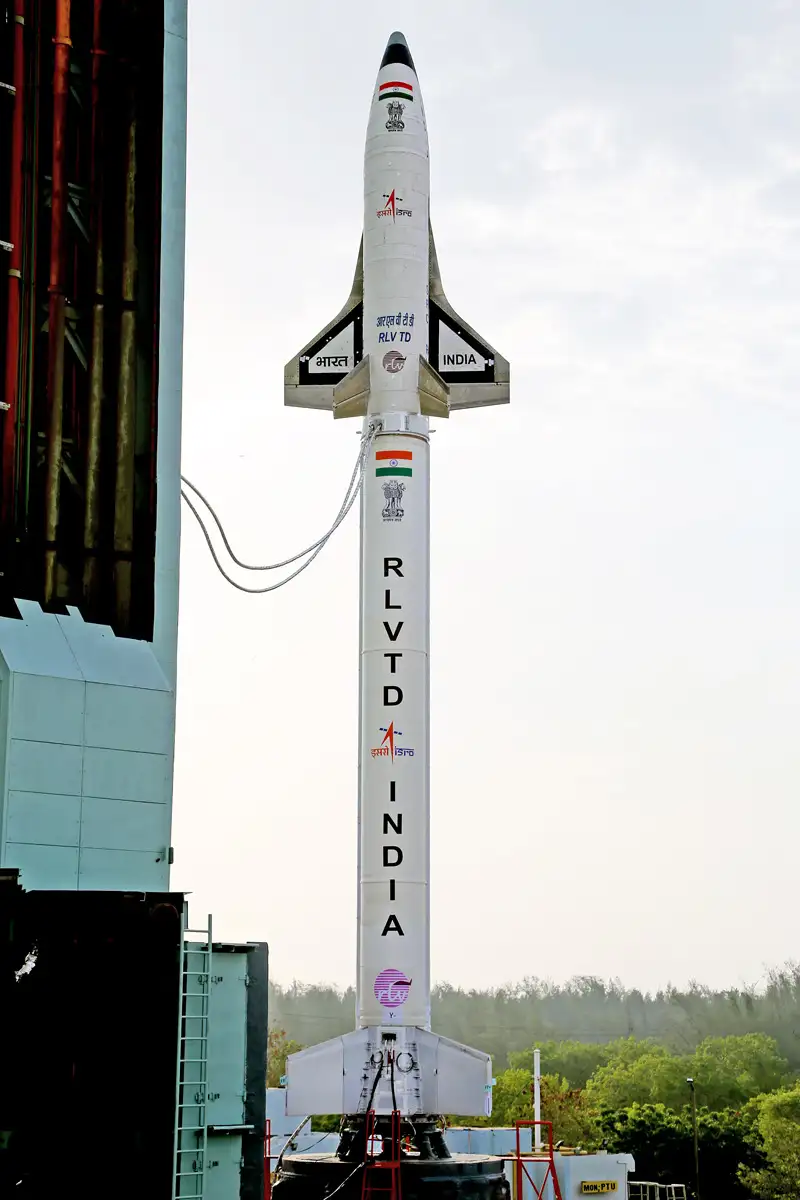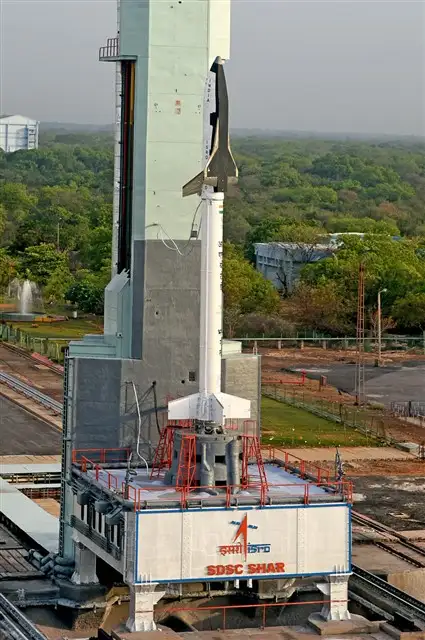
India's answer to SpaceX — a winged, reusable spacecraft that launches on a rocket, re-enters from hypersonic speeds, and lands on a runway like a plane. ISRO's Reusable Launch Vehicle programme has successfully tested key phases. The full orbital version is coming.
Watch: RLV-TD LandingThe RLV-TD (Reusable Launch Vehicle — Technology Demonstrator) programme is ISRO's effort to develop a winged, reusable launch vehicle that can dramatically reduce the cost of reaching space. The concept: a spacecraft that launches vertically on a rocket booster, reaches orbit, delivers its payload, re-enters the atmosphere at hypersonic speeds, and lands on a runway — fully reusable for the next mission.
The target is a 10x reduction in launch costs compared to expendable rockets — achieved by reusing the expensive vehicle rather than discarding it. SpaceX demonstrated this with Falcon 9's reusable first stage; India's approach uses a different architecture — a winged vehicle similar in concept to the Space Shuttle, but far more economical.
ISRO has completed three critical technology demonstration tests — HEX (Hypersonic Experiment), LEX (Landing Experiment), and REX (Return Flight Experiment) — each proving a different phase of the re-entry and landing sequence. The full orbital vehicle, RLV-01, is in development.
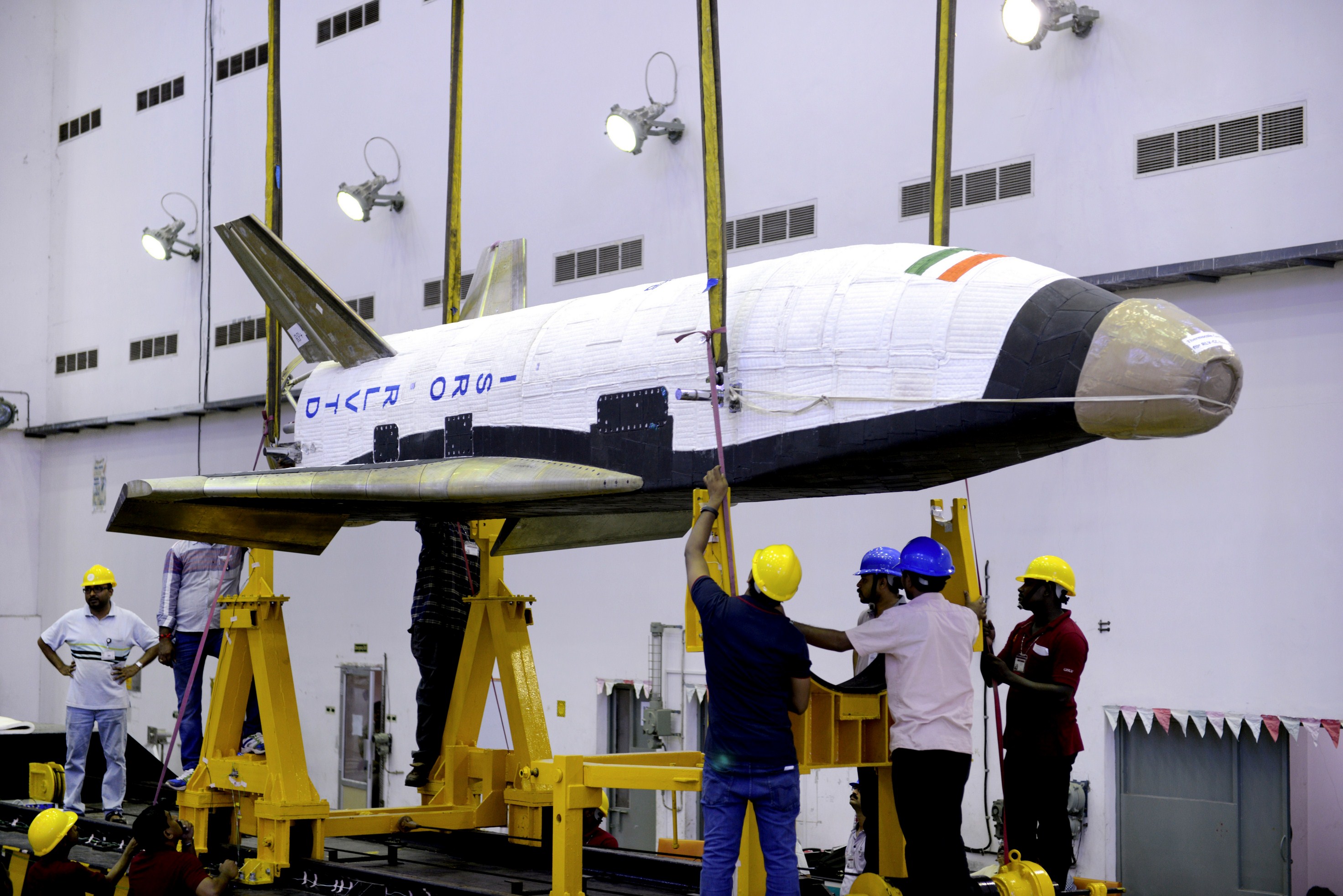
The most challenging phase of a reusable vehicle mission is re-entry — the vehicle arrives from orbit at approximately Mach 25, generating temperatures of 1,600°C on its leading edges. ISRO's thermal protection system uses carbon-carbon composites for the nose and leading edges (which see the highest temperatures) and silica-based ceramic tiles for the rest of the underside.
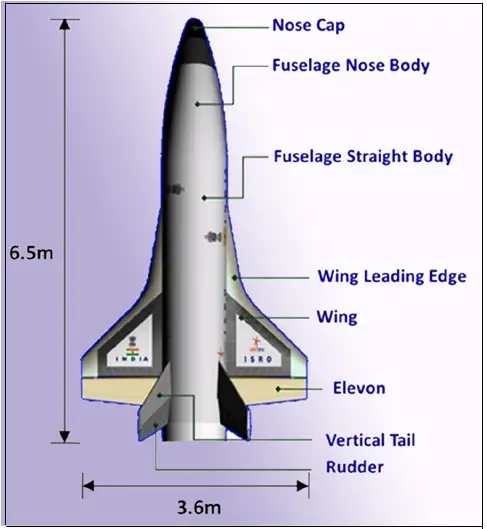
The vehicle uses aerodynamic control surfaces — elevons, rudder — to manage its glide path during re-entry and final approach. Unlike a conventional aircraft, the RLV lands unpowered — it has no engines for go-around. It must get the approach exactly right the first time, every time, autonomously.
ISRO's navigation system uses GPS, inertial measurement units, and radar altimeters to guide the vehicle through the final descent. For measuring airspeed and angle of attack, ISRO developed a Flush Air Data System (FADS) — an array of pressure ports distributed across the vehicle's outer surface that compute air data parameters without a protruding pitot probe. This is the same technology used on NASA's X-43 and other advanced hypersonic vehicles. The vehicle also deploys a brake parachute on touchdown, providing additional deceleration force on the runway alongside conventional wheel brakes — essential for stopping a fast-landing unpowered vehicle safely within a limited runway length.
The technology demonstrators have proven the key phases. The next step is RLV-01 — a full-scale orbital reusable vehicle that will launch on a rocket booster, reach orbit, deploy a payload, and return to a runway landing. This vehicle will be India's answer to SpaceX's Falcon 9 — not in scale, but in principle: launch, recover, refurbish, relaunch.
ISRO's target is to reduce India's launch cost per kilogram to orbit by a factor of 10 compared to current PSLV/LVM3 rates. If achieved, this would make India one of the most cost-competitive launch providers in the world — not just for Indian payloads, but for the global commercial market.
Swipe or click arrows to browse. Click any photo to zoom.